
Card surcharge ban leaves charities with questions – and costs
Posted on 14 Oct 2026
The Reserve Bank’s move to ban card payment surcharges has led to complications for charities and…
Posted on 01 May 2026
By Matthew Schulz, journalist, Community Directors

Charities – even the most old-school – are adopting smartphone payment technology as cash transactions slump.
This year, volunteers from hundreds of Returned and Services League (RSL) branches across Australia will be giving donors digital options to remember the fallen on Anzac Day.
The move follows the consumer shift away from cash. The latest figures from the Reserve Bank, released this week, show cash makes up just 15 per cent of payments and about 19 per cent of in-person transactions. Nearly two-thirds of adults under 29 don’t use cash at all.
Among the sub-branches making the move to digital donation options is Victoria’s Moe RSL, which draws hundreds of veterans, families and supporters to its annual Anzac Day service in the Gippsland town.
“This Anzac appeal is going to be the real tester."
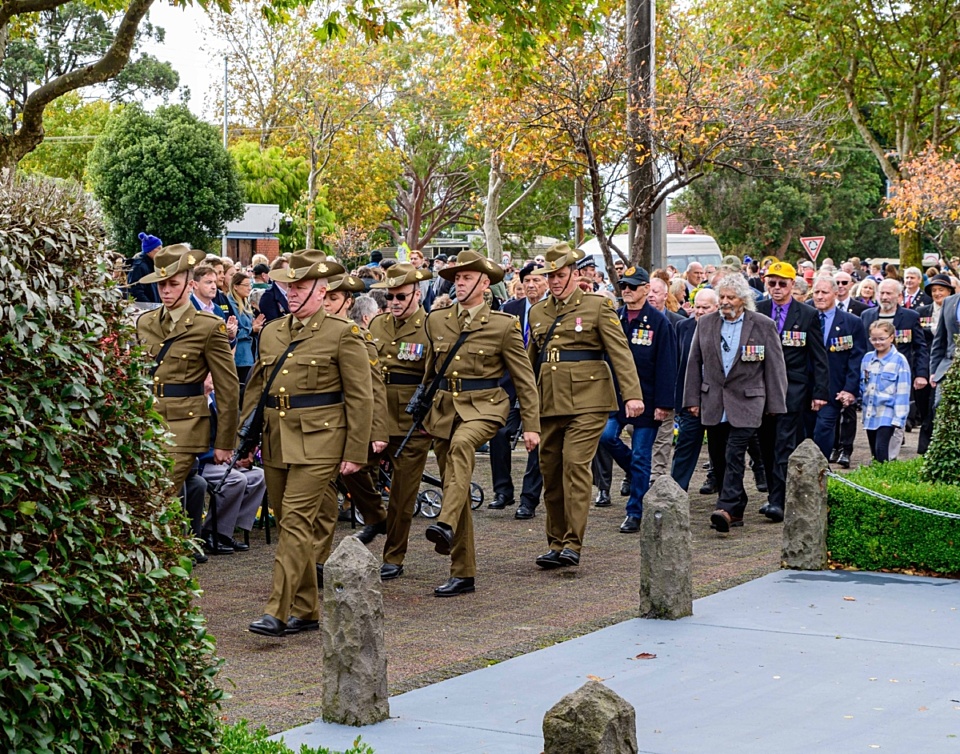
The local branch expects to raise more than $17,000 from this year’s Anzac Day fundraising push, more than a dollar for every Moe resident.
This year, donors will be able to contribute via QR codes, EFTPOS machines, and the trusty tins of old, as the organisation seeks to keep with the times and maintain its older support base too. RSL headquarters is also understood to be considering allowing payments to be made directly to volunteers’ phones via software called SoftPOS (software point of sale).
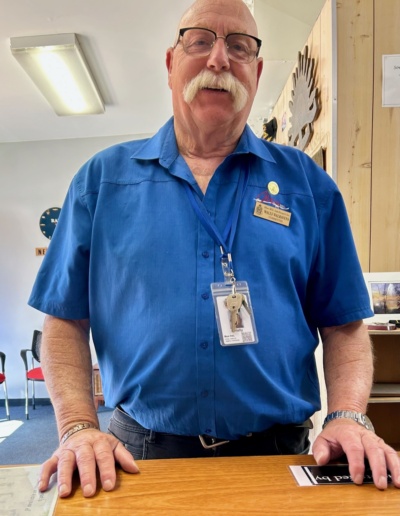
Moe RSL appeals officer Wally Walravens said his branch – along with others across the country – first trialled using QR codes to collect funds for its Poppy Day fundraiser for Remembrance Day in November last year.
“This Anzac appeal is going to be the real tester. We’ve got 25 boxes out with local businesses around the town, and we’ve put a QR code on all those boxes.”
Those boxes contain Anzac appeal badges, which people can purchase via an honesty system.
In addition, 36 collectors will be out on Moe streets and outside the local supermarkets accepting donations in person. Good weather so far has increased donations this year, and Walravens said volunteer collectors did not seem to have been troubled by the tech.
“We’ve started well.”
Walvravens expected that in coming years, the RSL would allow volunteers to collect funds directly to their phones, using the SoftPOS option.
He encouraged other organisations to adopt the new technology and keep their donations flowing.
“We’re heading to a cashless society. I don’t like it, but that’s the way things are going. And once the older generation is gone, everything will be done by QR codes, or cards, or phones. We’ve got to move with the times.”
The RSL is using an Australian-owned platform called Pebl, which enables charities and small organisations to accept donations with smartphones.
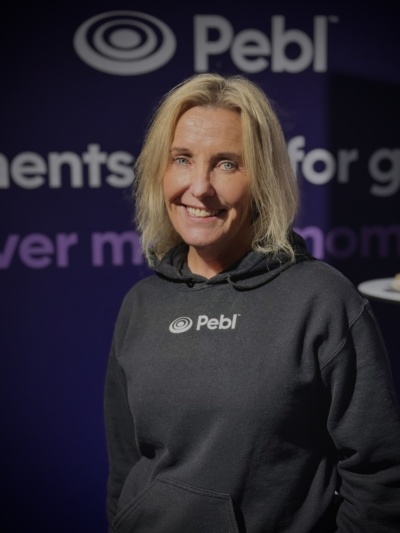
Pebl co-founder Schaan O’Hara said more than 200 charities, including some of the biggest in the country, were using the app to allow volunteers and charity events managers to accept funds.
She said the RSL used QR codes for their simplicity, because they would be easier for their older volunteer demographic, but the Pebl app also allows for tap-to-pay donations, QR code payments, and payments from digital wallets hosted by Apple and Google, as well as PayID.
O’Hara said the SoftPOS payments option had been adopted rapidly.
“We started out two years ago with non-charity merchants, but many of them wanted to raise money for charities,” O’Hara says. “When we came to the Fundraising Institute Australia Expo in 2025, we realised there was a real need to assist charities.”
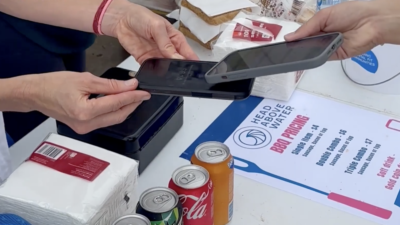
That pivot now dominates the business, and O’Hara estimates about 90 per cent of Pebl’s effort is directed towards charities who use the app to collect funds at events and community fundraisers and for larger campaigns.
O’Hara said the shift was being driven by the fact that traditional fundraising methods – especially for on-the-spot donations – were becoming less effective as fewer Australians carried cash.
The transition seems to be paying dividends, with some charities that use the platform reporting a big boost in fundraising results.
“Their fundraising has doubled or tripled at events.”
O’Hara said Pebl was working with a string of major charities, including those focused on motor neurone disease, epilepsy, children’s health and cancer.

Among the charities making the most of the technology is mental health fundraising outfit Head Above Water, based on Sydney’s northern beaches, which adopted the platform a couple of years ago.

Head Above Water founder and CEO Andrew Ward said the organisation had raised $165,000 for its most recent 24-hour swimathon at Collaroy Beach, relying heavily on the system for tap payments and QR codes.
“Even for someone like me who’s not good with technology … it was good. There’s a lot of people who came in with very little training and they could use their phones to get it up and running.”
O’Hara said the system eliminated the risks that went with handling cash.
“It’s safer and reduces reliance on volunteer honesty,” O’Hara says. “Tap-to-pay is card-present, meaning the donor must be physically there, which significantly reduces fraud compared to card-not-present transactions.”
While the new tap-to-pay created less “friction” for donors by mirroring normal retail transactions, the platform’s QR code payments – as being trialled by the RSL – represented a stepping stone for new adopters, she said.
“Merchants can print them on menus, T-shirts or posters.
“They’re also helpful for demographics less comfortable using tap-to-pay.”
Posted on 14 Oct 2026
The Reserve Bank’s move to ban card payment surcharges has led to complications for charities and…

Posted on 30 Sep 2026
Not-for-profit leaders have been warned to be wary of approaches from potential “funding partners”…
Posted on 30 Sep 2026
More than 200 fully funded Centre for Social Impact (CSI) scholarships will help equip for-purpose…

Posted on 12 Aug 2026
The federal Department of Health, Disability and Ageing is calling for submissions on how to help…

Posted on 10 Jun 2026
The Australian Charities and Not-for-profits Commission is set to release its 12th annual…

Posted on 03 Jun 2026
A new report has found that ongoing financial, workforce and governance pressures mean the…

Posted on 01 Jun 2026
A landmark multimillion-dollar sector-led national initiative to build the digital capabilities of…

Posted on 13 Apr 2026
A Community Directors survey of not-for-profit leaders’ biggest governance concerns has prompted a…

Posted on 08 Apr 2026
A current major global survey of charities is a vital conduit between Australian not-for-profits…

Posted on 25 Mar 2026
Community Council for Australia CEO David Crosbie has called on governments to consult with the…

Posted on 04 Mar 2026
The federal government has announced its decision on the percentage of assets that giving funds…
Posted on 11 Feb 2026
Australia’s not-for-profits need strategic investment by the federal government to support the…