
Tips for cultivating the support of Australia’s biggest private donors
Posted on 17 Sep 2026
One of Australia’s foremost fundraising observers says Australian not-for-profits must get the…
Posted on 13 Aug 2026
By Brett de Hoedt

Election campaigns create a rare opportunity for not-for-profits, community groups and campaigners of every kind. Suddenly, our leaders' shell-like ears are turned towards great ideas and worthy initiatives. Don't waste the opportunity.

The problem, of course, is that everyone else is trying to do exactly the same thing. So it pays to do a little homework before you launch your campaign.
1. Start early. However early you think an election campaign begins before polling day, in a politician's world it began about 72 hours after the last election victory.
Localise everything you can. During a foster care recruitment campaign, my company, Hootville Communications, was lobbying for greater government support to encourage more people to become foster carers. Rather than talking only about the statewide shortage, we calculated how many foster carers were needed in every electorate. Suddenly we could tell each MP exactly how many foster carers their community was missing.
Of course it wasn’t exact, but this isn’t rocket science – it’s showbiz. That made the issue far more relevant to politicians, who are understandably parochial, particularly backbenchers. Working out the shortage per electorate also created a league table showing which electorates were best and worst served, adding another layer of pressure.
2. Know which seats are marginal and which politicians effectively have a job for life. MPs fighting for survival are naturally more willing to meet, listen and, occasionally, even act.
Don't be fooled by the warmth and enthusiasm of unelected candidates. They've usually got plenty of time and very little responsibility, so of course they're happy to talk. Likewise, opposition MPs – or members of parties unlikely to form government – are often more willing to tell you exactly what you want to hear as they’ll never be accountable for driving the change.
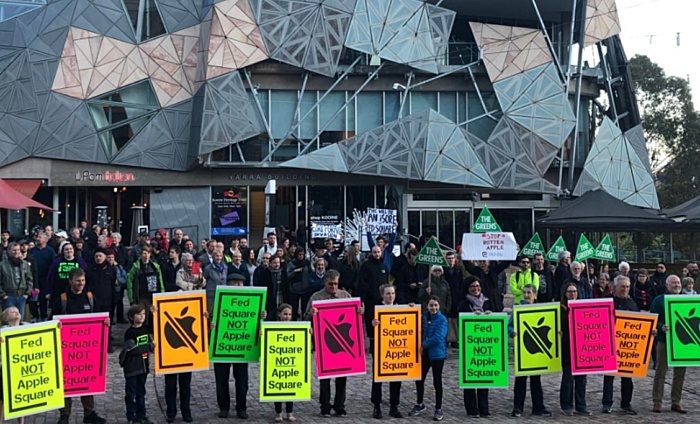
I saw this during the Our City, Our Square campaign to stop Apple from building a superstore in Federation Square. Members of the then-opposition Liberal Party were highly sympathetic. Their support was welcome, but ultimately they weren't the ones making the decision.
3. Numbers matter. Politicians need to see that your support is broad and substantial. Just as importantly, they need to believe that your support comes from their own electorate. It's easy to collect thousands of petitioners’ signatures from around Australia – or around the world – and politicians know it. Local support carries much greater weight.
"Numbers matter. Politicians need to see that your support is broad and substantial."
4. Visible local support matters too. Something as simple as an A4 poster displayed in shop windows, in workplaces or on front fences can make a real impression on local MPs. They notice what their constituents see every day. This is a low-tech, low-cost option.
If you have a social media budget, spend it strategically. Promote election-related posts in the electorates that matter using geographic targeting. Digital campaigning allows you to put your message directly in front of the voters politicians care about most. Local Facebook community pages can be hotbeds of debate – join them.

5. Think carefully about whether to directly challenge individual politicians and how aggressively. Doing so may alienate some supporters, but it will almost certainly attract the politician's attention. One group that made its choice very clearly is the Possum Park Protection Platoon in Adelaide. They have campaigned tirelessly against the destruction of hundreds of mature trees to make way for – believe it or not – a golf course.
Trees have an extraordinary ability to mobilise otherwise quiet citizens. The only issue I've seen generate even more spontaneous public outrage is animal cruelty.
The Platoon has been unapologetic in ruthlessly targeting South Australian premier Peter Malinauskas. That's a bold strategy. After all, he won the last state election comfortably, suggesting most South Australians are broadly happy with his leadership.
But the premier has personally defended the project and taken ownership of the decision. Fairly or unfairly, he has become the public face of the problem.
6. Go beyond the digital. Consider hitting the high streets with your campaign on the weekends. There’s a reason politicians do this: it works. If you have the budget, invest in a pop-up banner and some signage. Recruit some extroverted volunteers. Consider and reconsider being a physical presence at MPs’ offices. This can turn ugly and will be a step too far for some supporters. Attend any local candidate events.
7. It’s an old trick, but surveying candidates or parties and issuing a report card can help crystallise the situation for voters. Be sure to be fair and transparent in your process and criteria.
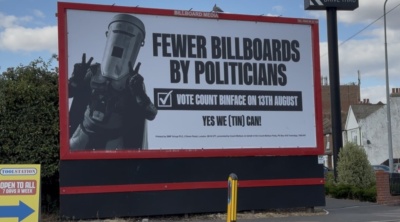
8. Consider running for office. This will gain you attention, credibility and access to candidate debates and forums. Embrace your inner Count Binface.
Brett de Hoedt is the mayor of Hootville Communications and has so far resisted the urge to enter politics. hootville.com.au
Posted on 17 Sep 2026
One of Australia’s foremost fundraising observers says Australian not-for-profits must get the…

Posted on 13 Aug 2026
Most new purpose-driven projects falter in the early phase because there’s no one assigned to the…

Posted on 10 Jun 2026
The not-for-profit sector's greatest asset in the age of artificial intelligence is its ability to…

Posted on 01 Jun 2026
A landmark multimillion-dollar sector-led national initiative to build the digital capabilities of…

Posted on 13 Apr 2026
A Community Directors survey of not-for-profit leaders’ biggest governance concerns has prompted a…

Posted on 12 Mar 2026
Australian charities are finding it increasingly difficult to recruit new donors, with rising…

Posted on 12 Mar 2026
Australia’s not-for-profits win nearly half the grants they apply for, but time and resourcing…
Posted on 12 Feb 2026
Our special NFP trends report distils the views of more than two dozen experts.

Posted on 01 Oct 2025
Persistence, planning and strategic focus continue to be the keys to grant success, according to…

Posted on 30 Sep 2025
I am proud of what Our Community, and its exceptional team, have achieved in the past 25 years. As…
Posted on 10 Apr 2025
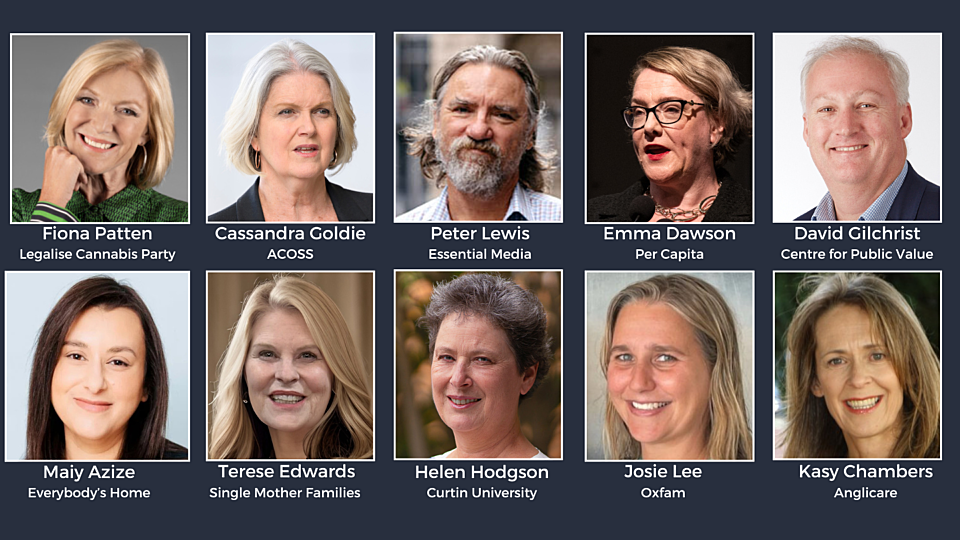
The nation’s community sector has a shopping list of positive and progressive policies it wants a…

Posted on 08 Apr 2025
Veteran politician Fiona Patten knows what it takes to win in politics, having achieved a string of…